
Legal Process for Withholding Rent for Repairs Explained
Learn the legal process for withholding rent for repairs, including written notice, reasonable repair time, documentation and when rent can be withheld.
Quick Summary
Withholding rent for repairs is a legal remedy in some jurisdictions that lets a tenant hold back rent after a landlord ignores a serious habitability problem. The process generally requires documenting the problem, sending written notice, and allowing a reasonable repair period before withholding, and some places require escrow instead.
- Document each problem with dated photos, videos, and a written log before taking any action.
- Send a written notice by certified mail and keep proof of delivery.
- Wait for the reasonable repair period your local law sets before withholding any money.
- Check whether your jurisdiction requires escrow instead of keeping withheld rent yourself.
- Respond in writing and attend any court date if you receive an eviction or nonpayment notice.
Table of Contents
- What Withholding Rent for Repairs Means and When It Is Allowed
- Step 1: Document the Problem Before Anything Else
- Step 2: Send a Written Rent Withholding Notice to Your Landlord
- Step 3: Give the Landlord a Reasonable Time to Make Repairs
- Step 4: Understand Repair and Deduct, Escrow and Withholding Differences
- How Much Rent Can You Withhold for Repairs and What to Do After an Eviction Notice
- Your Next Step: Review Your Lease and Local Rules Before You Stop Paying
- Frequently Asked Questions
Last Updated: November 4, 2026
Withholding rent for repairs is one of the most misunderstood tenant remedies, and the rules change depending on where you live. Here is how the legal process generally works in the United States, what you should document, and where the risks are.
Rent withholding is a legal remedy in some jurisdictions that lets a tenant stop or reduce rent payments when a landlord fails to fix serious problems. Withholding is not the same as simply not paying.
What Withholding Rent for Repairs Means and When It Is Allowed
Rent withholding is a tenant's right to hold back rent after a landlord ignores a valid repair request. The right usually comes from the warranty of habitability, a legal promise that rental housing must be safe and livable.
Habitability and Serious Repair Conditions
A landlord must generally keep the unit fit to live in. Serious conditions that often qualify include:
- No heat or hot water
- Broken plumbing or sewage backup
- Electrical hazards or exposed wiring
- Roof leaks that cause mold or structural damage
Minor cosmetic issues, like a scuffed wall or a dripping faucet, usually do not justify withholding. The condition has to affect health, safety, or basic livability.
Legal Reasons to Withhold Rent
Withholding is generally tied to a written repair request, a reasonable time for the landlord to act, and a violation of a housing code or habitability standard. Check your state and local rules, since some places allow withholding and others do not. If the property is changing hands, see tenant rights when your landlord sells the property. Some cities also require tenants to pay rent into an escrow account instead of keeping it.
Step 1: Document the Problem Before Anything Else
Strong evidence is the foundation of any withholding claim. Start documenting as soon as you notice a problem.
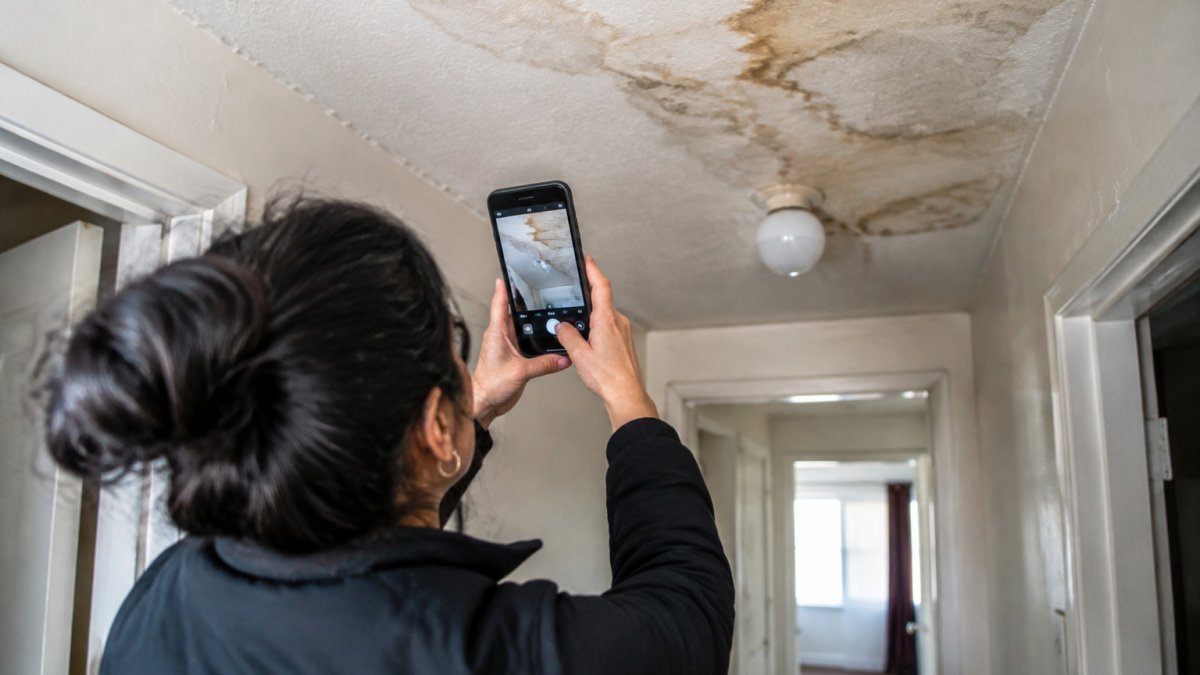
- Take dated photos and short videos of each issue
- Keep copies of all texts, emails, and repair requests
- Write a log with the date, time, and description of each problem
- Note any health effects, such as a child's illness or breathing trouble
Good documentation is what separates a credible claim from a dispute that falls apart in court. To organize repair problems and evidence in one place, see AI legal assistant for housing issues.
Step 2: Send a Written Rent Withholding Notice to Your Landlord
Most jurisdictions require written notice. A verbal complaint usually is not enough.
- Describe each condition clearly and specifically
- Reference the date you first reported it
- State a reasonable deadline for repairs, as required by your local law
- Send the notice by certified mail with return receipt, or another method that proves delivery
Watch out: Withholding rent without proper written notice is one of the most common reasons tenants lose eviction cases.
Step 3: Give the Landlord a Reasonable Time to Make Repairs
Most rules give landlords a set period to fix the problem. What counts as reasonable depends on the severity of the issue:
- Emergency issues like no heat in winter may require action within 24 to 48 hours
- Serious but non-emergency issues often allow about 14 to 30 days
- Minor issues may allow longer windows
Check your state or city code for the exact timeline. Do not start withholding until that period has passed without a fix.
Step 4: Understand Repair and Deduct, Escrow and Withholding Differences
Tenants routinely conflate three separate remedies, and choosing the wrong one is one of the fastest ways to turn a valid repair complaint into a nonpayment case. They are not interchangeable, they have different eligibility triggers, and many jurisdictions permit only one or two of them. Before you act, confirm which remedy your state or local code actually authorizes.
Rent withholding
Withholding means you stop paying some or all rent and keep the money yourself until the landlord makes the repair. It is the highest-risk option because the landlord can file a nonpayment action and argue that rent was due regardless of the repair dispute. For a broader overview of your obligations at renewal, see tenant rights and lease renewal guide.
Repair and deduct
Repair and deduct lets you arrange the repair yourself, pay a licensed contractor, and subtract the cost from future rent. It is usually capped, either as a dollar limit or as a fraction of one month's rent, and many codes limit it to one repair per lease term or require the landlord to be given a prior written notice and cure period first.
Rent escrow
Escrow means you keep paying rent on time, but you pay it into a court-supervised or government-supervised account instead of to the landlord. The money is released to the landlord once repairs are verified, or the case is resolved by a judge. Escrow is often the safest route because you are not in default on the rent obligation, but it usually requires a formal filing, a filing fee, and a hearing.
How to choose the right remedy
Work through the following questions in order, because the first "no" usually rules out that remedy:
- Does your state or city code expressly authorize this remedy for your type of unit? If not, stop.
- Is the condition a habitability or housing-code violation, not a cosmetic issue? If not, no remedy applies.
- Have you given written notice and allowed the cure period your local law requires? If not, wait.
- Does your local law require escrow instead of self-help withholding? If yes, file for escrow rather than holding the money.
- Is the repair one you can safely and lawfully arrange with a licensed contractor, within any statutory cap? If yes, repair and deduct may be available.
- If none of the above fits, your practical options are usually negotiation, a housing-code complaint, or legal aid, not withholding.
Watch out: A tenant who withholds rent under a repair-and-deduct theory, or deducts under a withholding theory, can be treated as simply not paying rent, which is why the remedy must match the local code rather than the tenant's preference.
HUD state and local tenant rights information
The three remedies differ in risk, eligibility and what the tenant must do, as summarised below.
| Remedy | What you do | Main risk |
|---|---|---|
| Rent withholding | Keep the rent yourself until the repair is made | Landlord can file a nonpayment action |
| Repair and deduct | Hire a licensed contractor and subtract the cost from future rent | Over-deducting counts as unpaid rent |
| Rent escrow | Pay rent into a court or government-supervised account | Requires a formal filing, fee and hearing |
How Much Rent Can You Withhold for Repairs and What to Do After an Eviction Notice
The amount you may lawfully withhold depends on local law. It is generally tied to the reduced rental value of the unit during the period the condition existed, and the method depends on the severity of the defect and how long it lasted. Some jurisdictions allow withholding of the full rent into escrow, some allow a proportional reduction, and some require the tenant to keep paying and sue for a refund or abatement later.
How a lawful rent reduction is typically calculated
Most practitioners describe the analysis in three steps:
- Establish the baseline rent. Use the rent stated in your lease, not a market estimate.
- Estimate the loss of use. Identify which rooms or systems were affected and for how many days. A unit with no heat in winter is usually treated as a larger loss than a single non-working outlet.
- Apply the local method. Some codes use a percentage reduction tied to the number of days the condition persisted; others leave the amount to the court's judgment based on comparable rental value.
Keep the records that support your figure: dated photos, the written notice, the landlord's response or silence, contractor estimates, and any inspection report. If you withhold too much, the landlord can treat the excess as unpaid rent, so a conservative, documented figure is safer than an aggressive one.
What to do after receiving an eviction or nonpayment notice
A nonpayment notice is a deadline, not a discussion. The steps below are the ones that matter most in the first days:
- Read the notice for the deadline and the amount claimed. The notice will state how many days you have to pay, cure, or vacate, and that period is set by state law.
- Respond in writing before the deadline. State that you are withholding or escrowing under the applicable remedy, reference your prior repair notice, and attach your documentation.
- Do not ignore a court date. If you have received a denied voucher or a related housing decision alongside an eviction notice, see how to appeal a denied housing voucher. If a case is filed, missing the hearing can result in a default judgment and a judgment for possession against you.
- Preserve every record. Texts, emails, certified-mail receipts, photos, inspection reports, and receipts for any repair you paid for.
Watch out: A landlord's acceptance of partial rent, or a tenant's failure to appear, can waive defenses that would otherwise have applied, so act on the notice rather than waiting for the repair.
Legal Services Corporation tenant help finder
Your Next Step: Review Your Lease and Local Rules Before You Stop Paying
Before you withhold any rent, read your lease and confirm your state and city rules. Each jurisdiction has different notice periods, escrow requirements, and caps. If your situation involves unusual lease clauses or a pending eviction, a consultation with a qualified tenant attorney or legal aid office can protect you. Consider a clear, step-by-step checklist for tenant rights questions if you want help organizing your next moves.
Frequently Asked Questions
Can you withhold rent for repairs in Illinois?
Illinois law has specific rules on rent withholding, and the availability of this remedy depends on the type of building, the city and the severity of the problem. Some Illinois municipalities may have their own repair and rent withholding rules. Before withholding any rent, check your city's housing code and your state's landlord-tenant statutes, and consider contacting a local legal aid organization to confirm the exact procedure that applies to your unit.
How much rent can I withhold for needed repairs?
The amount you can lawfully withhold is generally tied to the reduction in the rental value of your unit caused by the defect, not the full rent amount. Some jurisdictions set a specific formula or a cap, while others leave the amount to a court's judgment. Keep records of the condition, the date it began and the rent you paid, and document how the problem limited your use of the unit. Withholding more than the law allows can expose you to an eviction case for nonpayment.
Can my landlord evict me for withholding rent?
A landlord can file an eviction case if you stop paying rent, so withholding rent carries real risk even when the repair problem is legitimate. Your best defense is a strong paper trail: a written repair request, proof of delivery, photographs and a record showing you gave a reasonable time for repairs. Many states allow tenants to raise habitability problems as a defense in eviction court, but the outcome depends on local law and the evidence you can present.
What is the difference between withholding rent and repair and deduct?
Rent withholding means you pay less or no rent until the repair is made, which is the riskiest option because it can lead to nonpayment proceedings. Repair and deduct allows you to pay for a necessary repair yourself and subtract the cost from your rent, but it is only available in some jurisdictions and usually requires a limited dollar amount and a written notice. Rent escrow is a third option in which you deposit rent with a court or housing authority until the issue is resolved. Check which of these your local law permits before choosing one.
