

How to Qualify for SNAP 2026: Income Rules & Steps
Learn how to qualify for SNAP in 2026 with income limits, work rules, and documents. Get a step-by-step eligibility checklist and start your application.
Table of Contents
- SNAP Income Limits 2026: Gross and Net Tests
- Household Size, Composition, and Who Counts
- SNAP Work Requirements 2026 and Who Is Exempt
- Citizenship, Immigration Status, and Residency Rules
- Asset Limits and the Resource Test
- How to Apply and the Documents Needed for SNAP Interview
- SNAP Expedited Processing Eligibility and When You Get Benefits Fast
- State Variance, Inflation, and Other Programs That Affect Your Case
- Frequently Asked Questions
Last Updated: September 25, 2026
SNAP Income Limits 2026: Gross and Net Tests
To qualify for SNAP in 2026, most households must pass a gross income test, and many must also pass a net income test after deductions to qualify for SNAP.
How the 2026 Thresholds Are Set
The dollar amounts derive from the FPL, published yearly by the U.S. Department of Health and Human Services, which the USDA Food and Nutrition Service converts into SNAP limits. The annual cost of living adjustment (COLA) resets income thresholds and maximum benefits each October 1.
Gross Monthly Income Thresholds by Household Size
Because the exact dollar amounts shift every October, the only reliable source is the current chart from the USDA Food and Nutrition Service SNAP eligibility page. Use it to confirm the 130% gross limit and the 100% net limit for your household size before you apply.
How household size changes the math:
- One person: the lowest gross ceiling, easiest to exceed on a single full-time wage
- Each added member: raises the limits, but by less than most people assume
- Larger households: a higher total limit, but every member's income counts against it
Deductions That Lower Your Net Income
Deductions often decide whether you pass. Assuming gross pay decides everything is a common mistake.
Common deductions include:
- Standard deduction, based on household size
- Earned income deduction for wages
- Dependent care costs
- Court-ordered child support paid out
- Medical costs over a set amount for older or disabled members
- Excess shelter costs, including a standard utility allowance
A Worked Example
Say a three-person household has one full-time earner making $2,400 a month, pays $1,100 in rent, and has a standard utility allowance. The gross test applies first: if the 130% limit for three people is below $2,400, the household fails, unless a member is 60 or older or disabled, when only the net test applies. If it passes, deductions are subtracted and the net figure is compared to the 100% limit.
Household Size, Composition, and Who Counts
Household size drives every number in your application, and getting it wrong can cause a denial or an overpayment you must repay. A SNAP household is people who live together and buy and prepare food together, narrower than "everyone at this address."
Who usually counts:
- You and your spouse
- Your children under 22 who live with you
- Anyone who buys and cooks food with you
Who usually does not count:
- Roommates who buy food separately
- A landlord or boarder in a separate unit
- Children claimed by a non-custodial parent elsewhere
SNAP Work Requirements 2026 and Who Is Exempt
Most adults ages 18 to 54 must meet general work rules: registering for work, taking a suitable job if offered, and not quitting without good cause.
Some people are exempt. Common exemptions cover:
- A child under 18 in the home
- Pregnant women
- People who are physically or mentally unfit for work
- Regular participants in a training program
- Caregivers for a dependent who cannot self-care
Able-Bodied Adults Without Dependents (ABAWDs)
Able-bodied adults without dependents (ABAWDs), adults 18 to 54 with no dependents who are not exempt, must work, train, or volunteer about 20 hours a week to keep benefits past three months in a three-year window.
Some groups are excused, including:
- Veterans
- People experiencing homelessness
- Young adults aging out of foster care
Citizenship, Immigration Status, and Residency Rules
You must meet both citizenship and immigration status rules and residency requirements. U.S. citizens qualify if they meet the other tests, as do many lawfully present immigrants, often called a qualified non-citizen, lawful permanent residents, refugees, asylees, and certain others.
Key points:
- Some immigrants must wait five years before benefits
- Children and refugees often face no wait
- You need a Social Security number or proof you applied for one
- You must live in the state where you apply
Asset Limits and the Resource Test
The resource test checks what you own, not what you earn. Many households skip it, but some still face asset limits.
Which households face the test:
- Households with a member who is 60 or older
- Households with a member receiving disability payments
- Households that fail the gross income test
Countable resources usually include:
- Cash and bank balances
- Stocks and bonds
- Some vehicles, depending on state rules
How to Apply and the Documents Needed for SNAP Interview
Apply through your state SNAP agency, usually online, by phone, or in person. You can also start with the USDA SNAP application and state directory to find your state's portal.
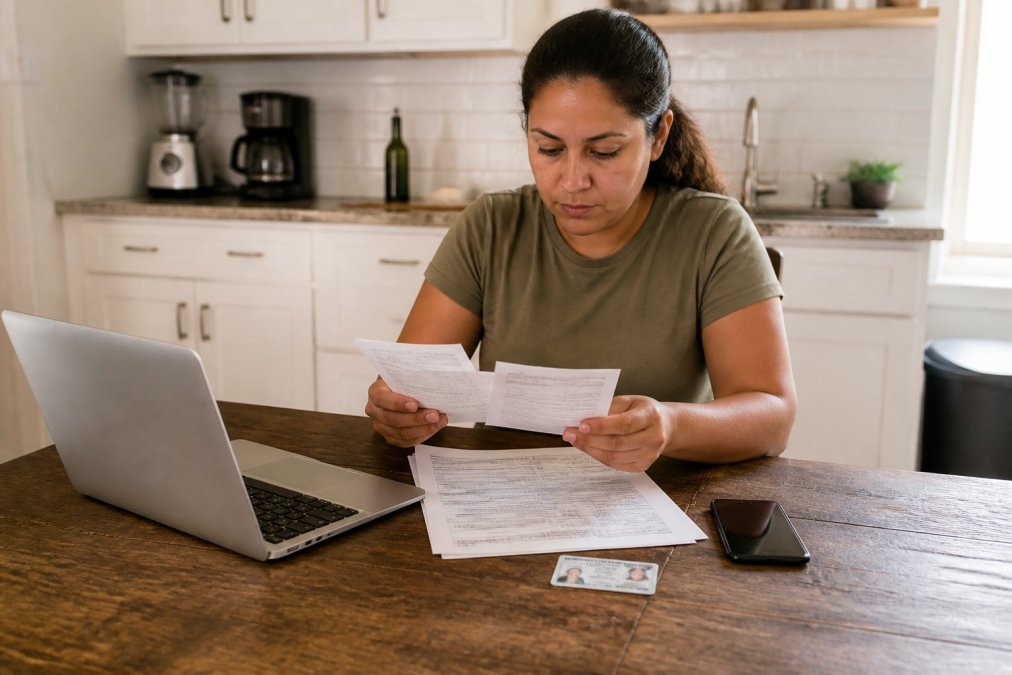
The documents needed for SNAP interview typically include:
- Photo ID for the head of household
- Social Security numbers for household members
- Proof of income, such as recent pay stubs
- Proof of residency, such as a lease or utility bill
- Proof of household expenses, including rent and utilities
- Immigration documents, if applicable
SNAP Expedited Processing Eligibility and When You Get Benefits Fast
SNAP expedited processing eligibility gives some households benefits within a short window instead of the normal 30-day timeline, if you have very little income or very few resources.
You may be eligible for expedited service if you:
- Make very little money this month and have minimal cash on hand
- Are a migrant or seasonal farmworker with little income
- Have combined income and resources below the expedited threshold
State Variance, Inflation, and Other Programs That Affect Your Case
Federal rules set the floor, but your state runs the program, and the differences decide whether you qualify.
How to Find Your State's Actual Rules
State variance affects income thresholds, asset limits, work waivers, and benefit speed. Three levers explain most of the difference:
- Broad-based categorical eligibility (BBCE). Many states extend SNAP to households slightly above the federal gross income limit, and some drop the asset test entirely for most households. If your state uses BBCE, you may qualify even when the federal chart says you are over.
- Standard utility allowances (SUAs). Each state sets its own utility figures, which feed directly into the excess shelter deduction. Two households with identical rent can land on different net incomes because their state's SUA differs.
- ABAWD waivers. States can waive the three-month time limit in areas with high unemployment. Whether a waiver covers your county is a state and county decision, not a federal one.
How Inflation and the October Reset Change Your Odds
Inflation matters because the annual cost of living adjustment resets income thresholds and benefits each October: higher inflation means a larger bump, low inflation a smaller one. Timing your application around the reset can change your result, if your income is right at the line in September, waiting until October may move you under the limit; if your income rose during the year, the reset may not keep you eligible.
How SNAP Interacts With Other Programs
SNAP interacts with other programs in ways that trip people up:
- TANF. Receiving Temporary Assistance for Needy Families can qualify you for SNAP automatically in some states, and in others it triggers a streamlined application. If you already get TANF, ask whether you are categorically eligible.
- WIC. WIC and SNAP are separate programs with separate income tests, but many households qualify for both. WIC does not count as income for SNAP purposes, so receiving it does not push you over the limit.
- Medicaid. Medicaid and SNAP often share income data through state systems. A change reported to one program can surface in the other, so keep your income information consistent across applications.
- Housing assistance. Rental subsidies can affect how your shelter costs are counted. Report them accurately so the shelter deduction is calculated correctly.
What to Do If Your Application Is Denied
If your application is denied, you can appeal. Every state has an appeals process with a deadline, often 90 days from the notice, though some states set shorter windows, the denial notice lists the steps and filing window. Many denials come from a missing document or misread income figure, so before filing a formal appeal, call your caseworker and ask what triggered the denial.
| Situation | What to Do | Where to Check |
|---|---|---|
| Income just over the limit | Claim all deductions, especially shelter, and check whether your state uses BBCE | State SNAP office |
| Missing documents | Re-submit before the deadline | Your caseworker |
| ABAWD time limit hit | Log work or training hours, and ask whether a county waiver applies | State work program |
| Denied application | Read the notice, then file an appeal within the deadline | Denial notice |
| Income near the line in September | Consider whether waiting for the October COLA reset changes your result | State income chart |
Frequently Asked Questions
What is the most income to qualify for SNAP in 2026?
Most households must have gross monthly income at or below 130% of the federal poverty level. For a household of three, that is around $2,800 per month, and for a household of four, roughly $3,380. Households with a member who is elderly or has a disability may qualify using the 200% net income test instead, and some states set higher gross limits. Always check your state's published income thresholds before applying.
Do SNAP eligibility requirements change annually?
Yes. Income thresholds, benefit allotments, and deduction amounts are updated each fiscal year, usually in October, through the cost of living adjustment. Work requirement rules and state waivers can also shift from year to year. That is why a guide written for 2025 may already be out of date. Confirm the current figures on your state agency's site or consult official sources before you submit an application.
How do household size and income affect SNAP qualification?
Household size sets your income ceiling: more people means a higher limit. Income is counted in two stages. Gross monthly income includes wages and most other money before deductions. Net income subtracts allowed costs such as the standard deduction, earned income deduction, dependent care, and excess shelter costs. You must pass both tests unless your household includes someone who is elderly or has a disability.
What documentation is required to prove SNAP eligibility?
Expect to provide photo ID, Social Security numbers for each household member, proof of residency such as a lease or utility bill, and proof of all earned and unearned income through recent pay stubs, benefit letters, or bank statements. If you claim dependent care or shelter costs, bring those bills too. Self-employed applicants usually need tax returns or business records. Missing documents are one of the most common reasons applications stall.
SNAP rules shift every year, and one missed document or deduction can cost you your benefits. ezanser.com turns official government guidance into clear, step-by-step checklists, available in English and Spanish for a flat $4.99 per report. You get jargon-free steps grounded in official sources like the USDA and HUD, so you can finish your application with confidence knowing no step was missed. Get started with ezanser.com and apply for SNAP the right way the first time.