

How to Audit Your Own Credit Report 2026: Step-by-Step
Learn how to audit your own credit report in 2026 with a step-by-step checklist, dispute letter template, and timelines for fixing errors.
Table of Contents
- Why a Credit Report Audit Matters in 2026
- How to Pull All Three Reports for Free
- Your Credit Report Audit Checklist: What to Review Line by Line
- How to Dispute an Error on Your Credit Report
- Credit Report Dispute Letter Template You Can Copy
- How Long Does a Credit Report Dispute Take?
- Handling Fraud, Identity Theft, and Unfamiliar Accounts
- Conclusion
- Frequently Asked Questions
Last Updated: October 17, 2026
Why a Credit Report Audit Matters in 2026
Learning how to audit your own credit report means a line-by-line review of your files from all three nationwide credit reporting companies to catch errors, outdated information, and signs of identity theft.
Most people check one report, spot no obvious problems, and stop. But each bureau keeps its own file, and an account can appear correctly on one report and wrongly on another.
How to Pull All Three Reports for Free
You can get free credit reports from all three nationwide credit reporting companies through AnnualCreditReport.com, the only federally authorized source. The site is run by the three bureaus and offers free reports plus paid credit scores and monitoring; no purchase is required for the reports.
Skip any site that asks for a credit card before showing your report. Those are not the authorized source.
AnnualCreditReport.com and Your Weekly Options
Federal law gives you free access to your credit reports, and the bureaus have continued to offer free weekly reports through the official site. Weekly access matters because you can check again after a dispute without paying.
Start at AnnualCreditReport.com, the federally authorized source for free credit reports and select all three bureaus in one session.
Online, Phone, and Mail Request Methods
You have three ways to request reports:
- Online: Fastest option, with instant access at AnnualCreditReport.com
- Phone: Call the official toll-free line
- Mail: Complete the request form and mail it to the address on the official site
Online is best for a first audit; mail is useful if you want a paper copy to annotate.
Your Credit Report Audit Checklist: What to Review Line by Line
Most guides tell you to "review your report carefully" and stop there, which is useless without a repeatable structure. The checklist below runs once per bureau, then compares across all three so you catch errors that appear on only one file.
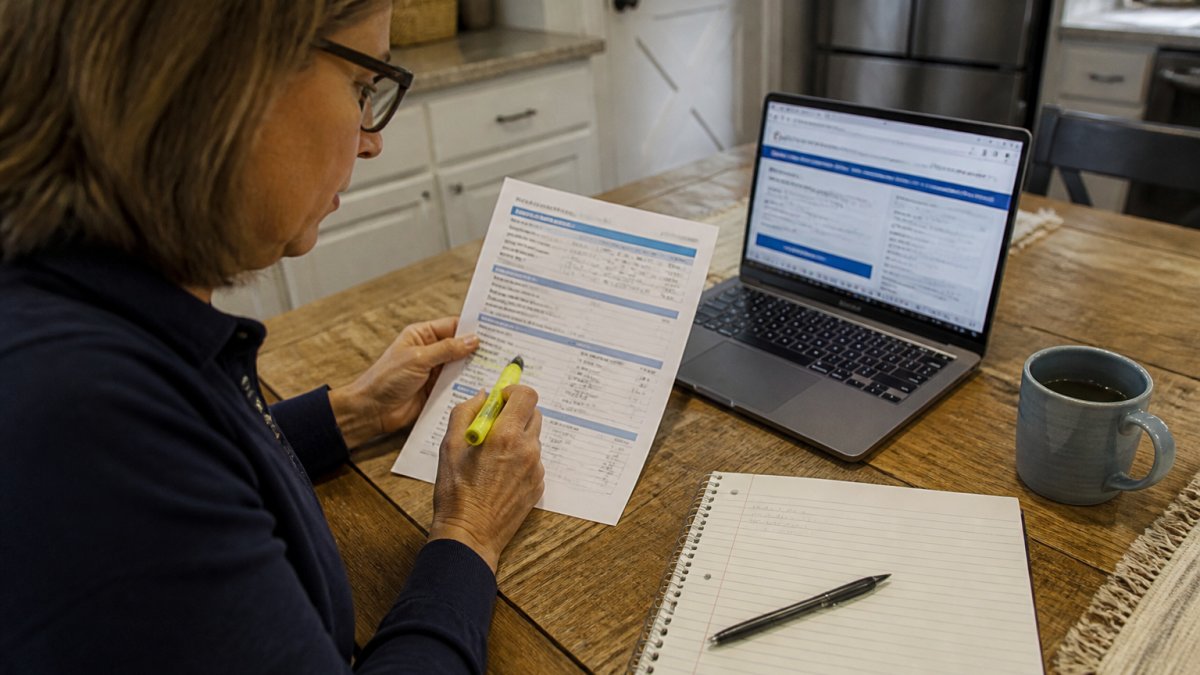
Step 1: Verify Identity and File Integrity
Before you look at any account, confirm the file is yours and complete. Check each item against your records:
- Full name, including maiden, married, and suffix variations
- Current address and every prior address (a wrong address can signal a mixed file)
- Social Security number (last four is enough for your worksheet)
A common pattern is a file that mixes your data with a relative or a stranger who shares your name. If you see an address you never lived at or an employer you never worked for, flag it now. That is a file-integrity issue, not a cosmetic one.
Step 2: Audit Every Tradeline
A tradeline is one account as reported by one furnisher. Go account by account, not section by section, and record the following for each:
- Account name and last four digits of the account number
- Account status: open, closed, paid, transferred, collection
- Owner: individual, joint, authorized user, or undesignated
Two errors deserve special attention: a closed account reported as open (or vice versa), which changes your utilization math, and a paid collection still showing a balance, one of the most common furnisher errors. Both feed the scoring models.
Step 3: Review Inquiries Separately
Split inquiries into hard and soft. Hard inquiries come from credit applications and stay about two years, though their score impact fades sooner.
For every hard inquiry, ask one question: did I apply for this? If the answer is no, or you do not recognize the lender, treat it as a possible fraud signal and move it to the fraud section of this guide.
Step 4: Scan Public Records and Collections
Check for bankruptcies, civil judgments, and tax liens. The nationwide bureaus no longer include most tax lien and civil judgment data, so verify any you see before disputing. For collections, confirm the original creditor, agency, amount, and date of first delinquency, the reporting clock runs from that date.
Step 5: Compare the Same Account Across All Three Reports
This is the step most people skip, and where the real audit happens. Build a comparison worksheet with one row per account and three columns, one per bureau. For each account, note:
- Does it appear on all three reports?
- Is the balance the same on all three?
- Is the status the same (open, closed, collection)?
Discrepancies are your priority list. An account on two reports but not the third may be a furnisher that reports to only some bureaus, or a data error. Different balances across bureaus are usually timing, but a balance consistently wrong on one bureau is a dispute candidate. Rank findings: errors on all three reports first, then two, then single-bureau issues.
Step 6: Score Your Findings and Set Priorities
Before you close the laptop, sort every finding into four buckets: (1) identity or fraud, (2) account ownership, (3) balance or status error, (4) outdated information.
A complete audit of all three reports typically takes one to two hours the first time. The worksheet makes the second audit fast, because you compare against your own prior notes rather than starting from scratch.
How to Dispute an Error on Your Credit Report
A dispute is only as strong as the evidence behind it. The Fair Credit Reporting Act gives you the right to dispute inaccurate or incomplete information and requires the bureau to investigate, usually within 30 days, but the statute does not do the work for you. What follows is the evidence-and-tracking process that turns a complaint into a correction.
Gather Evidence by Error Type
Match your evidence to the error. A generic letter with no attachments is easy to verify as accurate and close.
- Not my account: A copy of your credit report with the item circled, a statement that you never opened the account, and, if you have it, a police report or FTC Identity Theft Report. Do not send your full Social Security card.
- Wrong balance: Your most recent statement from the creditor showing the correct balance, plus the report page showing the wrong figure.
- Paid collection still showing a balance: A copy of the payment confirmation, canceled check, or bank statement showing the payment cleared, plus the collector's receipt if you have one.
Redact anything the bureau does not need: full account numbers, full Social Security number, and driver's license number. Last four digits are enough.
File With the Bureau and the Furnisher
File with the bureau that shows the error, and separately with the furnisher, the bank, lender, or collector that reported it. The two tracks are independent, and a furnisher correction often flows to all three bureaus faster than three separate bureau investigations.
- Bureau: File online through the bureau's dispute portal, by phone, or by mail. Online is fastest and gives you a confirmation number; certified mail gives you a paper trail. Keep the confirmation number or the green card.
- Furnisher: Send a written dispute to the address on your statement or the collector's letter. Reference the account, state the error, and attach the same evidence. Ask them to correct the item and to notify the bureaus.
Under the FCRA, the bureau must forward your dispute and evidence to the furnisher, who must investigate and report back.
Track Every Deadline and Outcome
A dispute is a project, not a single action. Log each item with the date sent, method, confirmation number, statutory deadline, and outcome. The bureau's investigation clock generally runs 30 days from receipt and can extend by up to 15 days if you send additional documentation during the investigation.
| Item Disputed | Bureau | Furnisher | Date Sent | Method | Confirmation # | Deadline | Result |
|---|---|---|---|---|---|---|---|
| Wrong balance | Bureau A | Card issuer | [date] | Online | [number] | [date + 30 days] | Pending |
| Unknown collection | Bureau B | Collector | [date] | Certified mail | [tracking] | [date + 30 days] | Pending |
When results arrive, read the updated report, not just the letter. "Verified" means the furnisher stood by the item; "deleted" or "modified" means the correction went through.
For the official process and your rights, see the Consumer Financial Protection Bureau's guidance on credit report disputes.
Credit Report Dispute Letter Template You Can Copy
Use this credit report dispute letter template. Fill in the bracketed fields and keep a copy for your records.
[Your Name] [Your Address] [City, State ZIP] [Date]
[Credit Bureau Name] [Bureau Dispute Address]
Re: Dispute of Inaccurate Information
To Whom It May Concern:
I am writing to dispute inaccurate information on my credit report.
Keep the letter factual and short. One page is enough.
How Long Does a Credit Report Dispute Take?
A credit report dispute usually takes up to 30 days from the date the bureau receives it. If you supply additional documentation during the investigation, the bureau may extend the deadline by up to 15 more days.
Track your disputes in a simple log:
| Item Disputed | Bureau | Date Sent | Deadline | Result |
|---|---|---|---|---|
| Wrong balance | Bureau A | [date] | [date + 30 days] | Pending |
| Unknown collection | Bureau B | [date] | [date + 30 days] | Pending |
If the investigation confirms an error, the furnisher must correct it. If the item is verified as accurate, it stays. Either way, you can add a brief statement of dispute to your file.
Handling Fraud, Identity Theft, and Unfamiliar Accounts
Unfamiliar accounts or inquiries you never authorized point to possible identity theft. Act quickly, because negative items report for years and a fraudulent account can drag down your credit score.
Take these steps:
- Place a free fraud alert with one bureau, which notifies the other two
- Consider a credit freeze, which blocks new credit applications in your name
- File an identity theft report with IdentityTheft.gov
The Federal Trade Commission's identity theft recovery steps walks you through the official recovery plan. Keep every confirmation number.
Conclusion
Auditing your credit report takes an afternoon, a worksheet, and patience with the dispute process. Most people skip the cross-bureau comparison or stop after one dispute, and that is where errors slip through.
If you want the process laid out as a clear checklist, ezanser.com turns official government guidance into step-by-step reports for a flat fee of $4.99, available in English and Spanish.
Frequently Asked Questions
Does checking my own credit report hurt my credit score?
No. Pulling your own credit report is a soft inquiry, which does not affect your credit score. Soft inquiries happen when you check your own report, when a lender pre-approves you, or when an employer runs a background check. Only hard inquiries, which occur when you apply for new credit, can lower your score slightly. You can request your reports from all three nationwide credit reporting companies as often as you like without any score impact.
How often should I audit my credit report?
Run a full credit report audit at least once every four months, pulling a different bureau each time so you cover all three across the year. If you are applying for a mortgage, auto loan, or apartment, check all three reports within 30 to 60 days before applying. Anyone who has experienced identity theft should check monthly and keep a fraud alert or credit freeze active. Weekly free reports through AnnualCreditReport.com make frequent checks practical.
What should I do if I find an account I don't recognize on my credit report?
Do not ignore it. First, confirm it is not a legitimate account under a former name or a store card you forgot about. If it is truly unfamiliar, file a dispute with the credit bureau and contact the information furnisher directly. If you suspect identity theft, place a free fraud alert with one bureau (it notifies the other two), consider a credit freeze, and file a report at IdentityTheft.gov. Keep copies of every letter and confirmation number in your audit file.
How long does a credit bureau have to investigate a dispute?
Under the Fair Credit Reporting Act, a credit bureau generally has 30 days to investigate a dispute, or 45 days if you submit additional information during the investigation period. The bureau must notify you of the results in writing and provide a free copy of your report if anything changed. If the information furnisher verifies the item as accurate, it stays on your report, but you can request that your statement of dispute be included in future reports.