
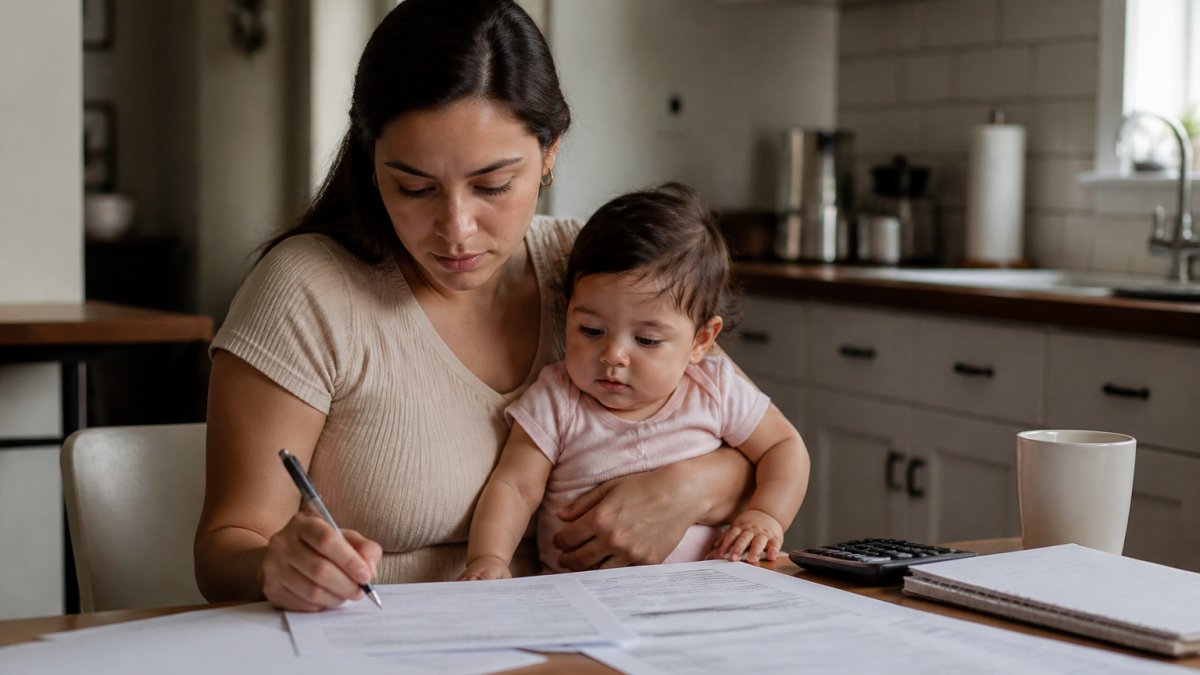
Government Assistance for Single Mothers 2026
A 2026 guide to government assistance for single mothers: cash, food, housing, child care benefits, eligibility rules, and how to apply.
Table of Contents
- Government Assistance for Single Mothers in 2026: What You Can Claim
- Cash Assistance for Single Mothers: TANF and State Programs
- Food Assistance for Single Mothers: SNAP, WIC, and School Meals
- Housing Assistance for Single Mothers: Vouchers and Rental Support
- Child Care Assistance for Single Mothers: Subsidies and Head Start
- Health Coverage, Education Grants, and Job Training for Single Mothers
- How to Apply for Government Assistance: Documents, Denials, and Urgent Needs
- Conclusion: Building Stability with Government Assistance in 2026
- Frequently Asked Questions
Last Updated: October 12, 2026
Government Assistance for Single Mothers in 2026: What You Can Claim
Government assistance for single mothers in 2026 is a patchwork of federal programs, state add-ons, and local grants. At ezanser.com, we build step-by-step checklists that turn official program rules into plain language, in English and Spanish.
The single most useful habit: treat benefits as a stack. A household that qualifies for one program usually qualifies for two or three more.
Benefits.gov official federal benefit finder lets you screen across programs in one sitting. Gather your documents once and reuse them everywhere.
How to Screen Yourself for Multiple Programs at Once
Screen for multiple programs by checking each one's income limit against your household size and dependent children, then applying to every program you clear. Most denials happen because people apply to one benefit and stop.
Use this order:
- Run the federal screener at Benefits.gov and note every program it flags.
- List your household size, including all dependent children, and your gross monthly income.
- Compare that income to each program's limit (state pages publish these).
- Apply to the programs with the highest monthly value first.
- Keep a copy of every submission and confirmation number.
A common mistake is assuming you earn too much to qualify. Limits vary widely by state and household size, and programs count income differently.
| Program | What It Covers | Typical Eligibility Factor |
|---|---|---|
| TANF | Monthly cash assistance | Income limit by household size |
| SNAP | Food benefits | Gross and net income limits |
| WIC | Food, formula, nutrition support | Categorical or income test |
| Housing Choice Voucher | Rental assistance | Area median income limits |
| Child care subsidy | Daycare costs | Income plus work or school |
| Medicaid / CHIP | Health coverage | Income as % of federal poverty level |
| Pell Grant | Education grants | Financial need via FAFSA |
Cash Assistance for Single Mothers: TANF and State Programs
Cash assistance for single mothers usually means TANF, or Temporary Assistance for Needy Families: a federal block grant that states run as their own cash program, with their own income limits, benefit amounts, and time limits, the closest thing to direct monthly cash in the safety net.
Because TANF is state-administered, the same household can receive very different amounts in two neighboring states. Most states attach work requirements and impose a lifetime limit on federal funds.
Income Limits and Benefit Amounts by Household Size
Income limits and benefit amounts for TANF change by state and household size, so no single national number applies. Your state's health and human services agency publishes the current chart.
What matters most:
- Household size drives the limit. Adding a dependent child usually raises the income ceiling.
- Benefit amount is set per person, with a maximum for the household.
- Time limits are typically counted in months of receipt, not calendar years.
Check your state's current figures directly, since amounts are adjusted periodically.
Food Assistance for Single Mothers: SNAP, WIC, and School Meals
Food assistance for single mothers comes from three main sources: SNAP (Supplemental Nutrition Assistance Program, formerly food stamps), WIC (for pregnant women, new mothers, infants, and young children), and free or reduced-price school meals.
SNAP is the broadest: monthly food benefits on an EBT card, with eligibility based on gross income, net income, and household size.
USDA Food and Nutrition Service program pages publishes the current SNAP and WIC eligibility rules and state contacts.
Housing Assistance for Single Mothers: Vouchers and Rental Support
Housing assistance for single mothers generally takes one of four forms: a Housing Choice Voucher (Section 8), public housing, project-based rental assistance, or short-term emergency rental support. The first three are administered locally by a Public Housing Agency (PHA), and most maintain waiting lists that open and close unpredictably.
How a Housing Choice Voucher Actually Works
A voucher does not hand you an apartment. It promises the PHA will pay a portion of rent directly to a landlord who agrees to participate. The mechanics matter:
- The PHA sets a payment standard for your metro area, based on HUD's Fair Market Rents.
- Your tenant share is generally about 30% of your adjusted monthly income, but it can rise if the unit rents above the payment standard.
- You typically have a limited search window, often 60 to 120 days, to find a unit that passes inspection.
Because demand outstrips funding in most markets, PHAs use preferences to rank the list: families who are homeless, doubled up, or facing eviction; families with a disability; and families referred by a child welfare agency. If any apply to you, say so on the application, a preference can move you years ahead.
Public Housing, Project-Based Units, and Other Tracks
Public housing is a PHA-owned unit with rent set at roughly 30% of adjusted income. Project-based assistance ties the subsidy to a specific building, so you lose it if you move.
Your state Housing Finance Agency runs separate programs many families never hear about, first-time homebuyer down-payment help, rental development set-asides, and sometimes direct rental vouchers for specific populations. HUD rental assistance information explains voucher rules and links to the PHA that serves your address.
Emergency Rental Assistance and Eviction Prevention
A frequent and costly mistake: families wait months for a voucher while an eviction notice sits on the table. Emergency rental assistance and eviction-prevention funds are a separate, faster track, usually run by a local nonprofit, community action agency, or state program, and can pay back rent, current rent, and sometimes utility arrears in a single award.
When you contact your local agency, ask specifically about:
- Emergency rental assistance or eviction-prevention funds
- Utility arrears tied to the same application
- Whether the program pays the landlord directly
What to Bring to a PHA Appointment
Most PHAs ask for the same core set at intake: photo ID, Social Security numbers for household members, birth certificates for children, proof of current address, and proof of all income sources. Bring originals and copies. If your income is zero, ask the agency what form it uses to document that, a signed statement is often accepted.
If you are denied or placed below where you believe you should rank, the notice will state your right to a hearing. Request it in writing before the deadline. Denials are often caused by a missing document or a miscalculated income figure, and both are correctable.
Child Care Assistance for Single Mothers: Subsidies and Head Start
Child care assistance for single mothers is typically a state subsidy that pays a portion of daycare costs directly to a provider, plus Head Start and Early Head Start for eligible children.
Two details trip people up. First, the subsidy often covers only licensed providers, so confirm your daycare is approved before you enroll.
Head Start is income-based and free for eligible families, and it includes early education plus health and nutrition support.
Health Coverage, Education Grants, and Job Training for Single Mothers
Health coverage, education grants, and job training most often change a single mother's long-term finances, because they lower ongoing costs and raise earning power at the same time. What most miss is how the three stack, and how the timing of one application can unlock the others.
Health Coverage: Medicaid, CHIP, and Marketplace Subsidies
Medicaid covers low-income parents and children, with income limits set as a percentage of the federal poverty level (FPL). Many states have expanded parent coverage well above the old thresholds, so check your state's current number rather than assuming you earn too much. CHIP covers children whose family income is above the Medicaid limit but still modest, often up to roughly 200% of FPL, though the ceiling varies by state.
Two mechanics matter more than the headline numbers:
- Medicaid uses modified adjusted gross income (MAGI) for most applicants, which means the income counted is not always the same figure another program uses.
- There is no open enrollment window for Medicaid and CHIP. You can apply any month of the year. Marketplace coverage, by contrast, has an annual open enrollment period plus special enrollment triggered by events like job loss, a move, or a change in household size.
HealthCare.gov official coverage information walks through eligibility and enrollment windows, and your state Medicaid agency runs the application portal for Medicaid and CHIP.
Education Grants: Pell, FAFSA, and State Aid
The Pell Grant is the main federal need-based grant for undergraduates. It is awarded through the FAFSA, does not have to be repaid, and can be used at community colleges, four-year schools, and many trade programs. Two details single mothers often miss:
- The FAFSA uses prior-prior year income, so a low-income year can affect your award two cycles later. File every year regardless of what you earned last year.
- A dependent student's parent information is not required if you are 24 or older, married, a veteran, or have a legal dependent of your own. Most single mothers file as independent students.
State scholarships and tuition assistance stack on top of Pell. Your state higher-education agency publishes its list, and many community colleges have a single application that routes you to every aid program you qualify for.
Job Training: American Job Centers and TANF Work Programs
American Job Centers, local offices of the federal workforce development system, run free job training, resume help, and placement services. They are open to anyone, not just TANF recipients, and many offer:
- Short-term occupational training in fields like health care, logistics, and IT
- WIOA-funded tuition assistance for approved programs
- Child care and transportation supports while you train
If you receive TANF, your state's work program may require job search, training, or employment hours. Ask your caseworker whether your training hours count toward the requirement, in most states they do, and coordinating the two prevents a sanction.
How the Three Stack
A common pattern: a mother enrolls in short-term training through an American Job Center, uses Pell and WIOA funds for tuition, keeps Medicaid for herself and CHIP for her children during training, and moves into a job with employer coverage. Each step reinforces the next, but only if the applications are filed in the right order.
How to Apply for Government Assistance: Documents, Denials, and Urgent Needs
Apply for government assistance by filing through your state's official portal for each program, uploading the same document set to every application, and tracking each confirmation.

Document checklist to gather once:
- Photo ID for the adult applicant
- Social Security numbers for everyone in the household
- Proof of residency (lease, utility bill, or mail)
If you are denied: read the notice for the specific reason and the appeal deadline. Denials are frequently caused by missing documents or a miscalculated income figure, and both are correctable.
If you have an urgent need: ask specifically about expedited SNAP, emergency rental assistance, and emergency cash.
This is exactly the kind of coordination where ezanser.com helps: one plain-language checklist per task, in English or Spanish, grounded in official sources.
Conclusion: Building Stability with Government Assistance in 2026
The hardest part of government assistance for single mothers in 2026 is not qualifying. It is coordinating several programs, meeting each deadline, and keeping documentation straight while life keeps moving.
ezanser.com turns that into a clear checklist for a flat $4.99 per report, in English and Spanish, with no jargon and no contradictory search results.
Get started with ezanser.com and move through your benefits applications with confidence.
Frequently Asked Questions
What government assistance can single mothers get in 2026?
Single mothers can apply for several federal and state programs: cash assistance through TANF, food benefits through SNAP and WIC, housing help via Section 8 vouchers or public housing, child care subsidies through CCDF, health coverage through Medicaid or CHIP, and education grants like the Pell Grant. Many states add their own programs, so check your state's benefits portal alongside federal options to see everything you qualify for.
What income qualifies a single mother for assistance?
Income limits vary by program and household size. SNAP generally uses a gross monthly income cap around 130% of the federal poverty level, while TANF and child care subsidies often set lower thresholds. Medicaid limits are higher in states that expanded coverage. Because each program counts income differently, use your state's screening tool to check eligibility across several programs at once before applying.
Can single mothers get help with rent or housing?
Yes. Housing assistance for single mothers includes Housing Choice Vouchers (Section 8), public housing, and emergency rental assistance through local agencies. Waiting lists can be long, so apply to multiple programs and ask about preferences for families with children. State Housing Finance Agencies also offer first-time buyer and rental support programs worth checking.
How long does it take to get approved for government assistance?
Timelines depend on the program. SNAP applications are typically decided within 30 days, with expedited benefits in about 7 days for urgent cases. Medicaid processing varies by state but often takes 30 to 45 days. TANF and housing vouchers can take longer, especially where waiting lists exist. Submit a complete application with all documents to avoid delays.
What should a single mother do if her benefits application is denied?
Every denial notice includes appeal instructions and a deadline, often 30 to 90 days. Read the reason for denial carefully, since it may be a missing document or a counting error. You can request a fair hearing, submit additional proof of income or expenses, and reapply if your situation changes. Legal aid organizations often help with appeals at no cost.
Can single mothers get health insurance for themselves and their children?
Yes. Medicaid and the Children's Health Insurance Program (CHIP) cover low-income families, and many single mothers qualify based on household size and income. In states that expanded Medicaid, adults with income up to 138% of the federal poverty level may qualify. You can apply through HealthCare.gov or your state Medicaid agency, and children often qualify even when parents do not.
Where can single mothers find state and local assistance programs?
Start with your state's benefits portal, which lists TANF, SNAP, Medicaid, and child care programs in one place. County departments of social services handle applications locally. Nonprofits, community action agencies, and 211 helplines connect families to emergency assistance, utility help, and food pantries. Applying through official channels keeps your information secure and your benefits accurate.