
Benefits of Public Housing for Seniors: 7 Key Advantages
Public housing for seniors offers income-based rent, accessibility features, and supportive services that help older adults live independently.
Table of Contents
- What Are the Benefits of Public Housing for Seniors?
- Public Housing for Seniors Eligibility: Age, Income, and Other Requirements
- How Income-Based Rent for Seniors Keeps Housing Affordable
- Public Housing Application for Seniors: A Step-by-Step Overview
- Public Housing vs Section 8 for Seniors: Key Differences
- Supportive Services and Accessibility Features for Older Adults
- Trade-Offs and Limitations: What Seniors Should Consider
- Frequently Asked Questions
Last Updated: October 15, 2026
What Are the Benefits of Public Housing for Seniors?
Public housing for seniors is a federally funded rental program that gives older adults a safe, affordable place to live, with rent capped at roughly 30% of their adjusted income. The benefits go well beyond a lower monthly check. They include stable tenure, accessible units, and on-site services that help residents stay independent.
This guide breaks down the advantages that matter most to older renters, plus the eligibility rules, waitlist realities, and trade-offs. Below, we'll show you exactly how the program works and how it compares to vouchers and Section 202 housing.
The core benefit is simple: predictable housing costs. When your rent is tied to your income, a fixed Social Security check stretches further. The HUD public housing program overview explains how local housing authorities set these rents.
Public Housing for Seniors Eligibility: Age, Income, and Other Requirements
Most public housing for seniors eligibility rules require you to be 62 or older, though some properties set the threshold at 55. You must also meet income limits set each year by HUD and pass a background check.
Here's what typically decides your eligibility:
- Age: 62+ for most senior-designated buildings, sometimes 55+
- Income: Below the local low-income limit for your area and household size
- Citizenship or eligible immigration status
- Background check: No disqualifying criminal history
- Rental history: No recent evictions for nonpayment
Income limits vary by county and household size, so the exact number depends on where you live. Check your local housing authority's current figures before applying. For broader context on how these programs fit together, see HUD's affordable housing resources.
How Income-Based Rent for Seniors Keeps Housing Affordable
Income-based rent for seniors is the mechanism that keeps public housing affordable, and it works differently from a market lease. Your housing authority projects your household's anticipated annual income for the coming year, subtracts any deductions you qualify for, and then sets your rent as a share of that adjusted figure, commonly around 30% of adjusted income, though some authorities use a minimum rent floor or a flat ceiling for higher earners.
What counts as income is broader than many seniors expect. It generally includes:
- Social Security retirement and SSI payments
- Pensions and annuities
- Wages from part-time or seasonal work
- Interest, dividends, and other investment income
- Rental income from a property you own
Some items are typically excluded or treated separately, such as certain lump-sum reimbursements, some types of veteran benefits, and payments for a live-in aide. Because treatment varies, confirm the specifics with your housing authority rather than assuming.
Deductions are where the calculation gets senior-specific. Common ones include:
- Medical expenses above a set threshold, premiums, prescriptions, and some care costs may count
- An elderly family allowance for households where the head, spouse, or co-head is 62 or older
- A dependent allowance for minor children or certain disabled family members
- Disability assistance expenses that let a household member work
Here is a simple illustrative example, using round numbers only to show the mechanism. Suppose your only income is a Social Security benefit of $1,400 per month. You pay $200 per month in Medicare premiums and out-of-pocket prescriptions that qualify as medical expenses above the threshold. Your housing authority subtracts the allowable medical amount and the elderly family allowance from your annual income, arrives at an adjusted annual figure, and then applies the roughly 30% share. The result is a rent well below what the same unit would command on the open market, and it is recalculated, not locked in.
That recalculation is the part seniors need to understand. If your Social Security payment rises with a cost-of-living adjustment, your rent may rise slightly too, but not dollar-for-dollar. If your income drops, say a pension ends or a spouse passes away, your rent usually drops after you report the change and the authority processes it. That flexibility is what separates public housing from a fixed-market lease.
Report every income change promptly. Failing to do so can create a retroactive balance you will have to repay, and repeated non-reporting can put your tenancy at risk. Keep pay stubs, benefit letters, and bank statements organized so you can document changes when asked. For the underlying rules on how income and deductions are defined, see HUD's public housing program overview.
Public Housing Application for Seniors: A Step-by-Step Overview
The public housing application for seniors follows a predictable path, but the wait is the hard part. Here's the sequence most housing authorities use.
- Find your local housing authority and confirm the property accepts seniors
- Complete the application form online or in person
- Submit documents: ID, birth certificate, Social Security card, income proof, and bank statements
- Wait for your placement on the waitlist
- Respond immediately when your name is called for screening
- Attend the interview and provide updated documents
- Sign the lease and complete the move-in inspection
Waitlists often run from months to several years, depending on demand. Apply to multiple housing authorities at once to improve your odds. Prepare your documents in advance so you can respond fast when a unit opens.
Public Housing vs Section 8 for Seniors: Key Differences
The main difference between public housing vs Section 8 for seniors comes down to who controls the unit. Public housing is a specific building owned and run by the housing authority. Section 8, also called the Housing Choice Voucher program, gives you a voucher to rent from a private landlord.
| Feature | Public Housing | Section 8 Voucher |
|---|---|---|
| Who owns the unit | Housing authority | Private landlord |
| Where you can live | Designated properties | Any qualifying rental |
| Rent calculation | Income-based | Income-based, tenant pays share |
| Waitlist length | Often long | Often longer |
| Accessibility | Built-in features | Depends on the unit |
| Support services | Frequently on-site | Rarely included |
For seniors who want stability and on-site help, public housing often fits better. For those who want to stay in a specific neighborhood or near family, a voucher offers more flexibility. Section 202 supportive housing is a third path, designed for very low-income older adults who need services.
Supportive Services and Accessibility Features for Older Adults
Supportive services and accessibility features are what make public housing genuinely senior-friendly, but the honest answer is that they vary enormously from property to property, and the only way to know what you are getting is to ask before you sign. This section covers what is commonly available, what is rare, and how to verify it.
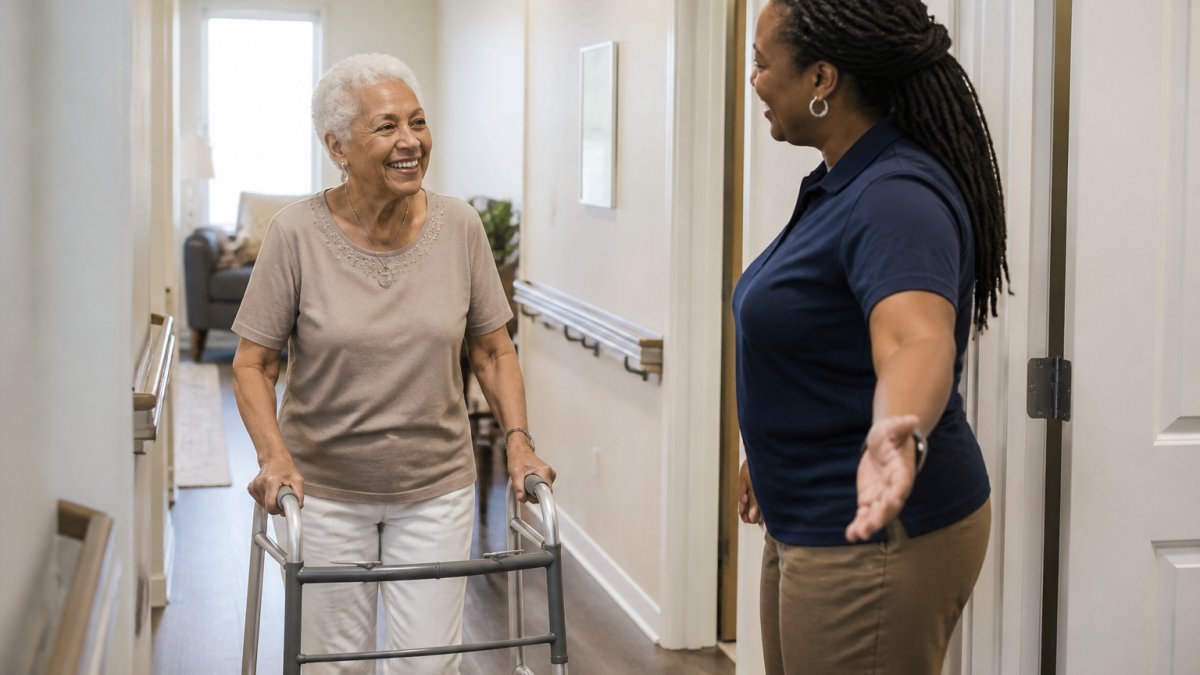
Accessibility features. Many senior-designated properties are built or retrofitted with features that support mobility and safety, including:
- Grab bars in bathrooms and roll-in or step-in showers
- Widened doorways and lever-style handles instead of knobs
- Elevators in multi-story buildings
- Handrails along corridors and in common areas
- Lower countertops and reachable cabinets in some units
- Emergency pull cords or call buttons in bedrooms and bathrooms
Do not assume every unit includes all of these. A building may have accessible common areas but no accessible units available, or accessible units that are already occupied with a waitlist of their own. Under the Americans with Disabilities Act and Section 504 of the Rehabilitation Act, covered properties have obligations around accessibility and reasonable accommodations, but the practical availability of a specific feature depends on the building and current occupancy.
Supportive services. Some properties include a service coordinator, a staff member whose job is to connect residents with transportation, meal programs, in-home care, benefits counseling, and social activities. Where a coordinator exists, the role can be a genuine difference-maker for aging in place. But service coordination is not universal, and even where it exists, staffing levels vary. A building may list a coordinator in its brochure while that position is part-time, vacant, or shared across several properties.
Services that are sometimes available on-site or through partners include:
- Scheduled transportation to medical appointments and grocery stores
- Congregate meals or meal delivery coordination
- Health screenings and wellness clinics
- Social and recreational programming
- Assistance applying for SNAP, Medicaid, or utility support
Aging in place. These features support aging in place, which lets residents stay in their homes as their needs change rather than moving to a facility. The trade-off is that aging in place works best when the property has both the physical features and the service connections to match a resident's changing needs. A unit with grab bars but no transportation and no coordinator may not support a resident who stops driving.
How to verify before you commit. Ask the property manager directly:
- Which accessibility features are in the specific unit being offered, not just the building?
- Is there a service coordinator, and is the position currently filled and full-time?
- What services are provided on-site versus referred out?
- Are there any fees for services, and are they optional?
- What happens if my needs increase, is there a process for transferring to a more supportive unit?
Get the answers in writing if you can. What is offered today may change with funding and staffing, so treat any verbal promise as a starting point, not a guarantee.
Trade-Offs and Limitations: What Seniors Should Consider
Public housing isn't right for everyone, and honest trade-offs matter. The biggest limitation is the wait. Some lists close entirely for years, and preference categories favor certain applicants over others.
Other realities to weigh:
- Limited choice: You take the unit offered or stay on the list
- Income reporting: Every change must be reported, and errors create repayment balances
- Rules: Inspections, guest policies, and pet limits apply
- Scams: Never pay a fee to "hold" a unit; legitimate housing authorities don't charge application fees
Understand your tenant rights and keep copies of every document you submit. If a rule or notice confuses you, get it explained in plain language before you sign anything.
Frequently Asked Questions
What benefits does public housing offer seniors?
Public housing for seniors offers several key benefits: rent capped at 30% of adjusted income, utility allowances, accessible units with grab bars and step-free entry, on-site supportive services like transportation and meal programs, and a stable community that helps prevent homelessness. Many properties also provide activities and wellness checks, making it easier for older adults to live independently.
Do seniors pay less rent in public housing?
Yes, most seniors in public housing pay 30% of their adjusted annual income for rent, after deductions for medical expenses and a dependent allowance. Because many older adults live on fixed incomes, this income-based rent is often significantly lower than market-rate apartments. Some residents may qualify for a minimum rent of $25 to $50, but hardship exemptions exist.
Can seniors live independently in public housing?
Public housing is designed for independent living. Seniors manage their own daily routines, but they benefit from a safe, affordable environment with optional supportive services. If a resident needs help with activities of daily living, some properties offer in-home care coordination. However, public housing is not a nursing home or assisted living facility; it is for those who can live on their own.
What is the difference between public housing and Section 8 for seniors?
Public housing is a subsidized rental unit owned and operated by a local housing authority, while Section 8 (Housing Choice Voucher) helps seniors rent a private unit of their choice. Public housing often has more accessibility features and on-site services, but waitlists can be long. Section 8 offers more location flexibility but requires finding a landlord who accepts vouchers.
Navigating public housing rules, income reporting, and waitlist paperwork can feel overwhelming, especially when every form uses the same dense language. ezanser.com turns official housing and benefits information into clear, step-by-step checklists for a flat $4.99 per report, available in both English and Spanish. You get guidance grounded in official sources, no jargon, and the confidence that no step was missed. Get started with ezanser.com and move through your application with clarity.