

7 Steps to Apply for Section 8 Housing
Apply for Section 8 housing in 7 steps. Learn eligibility, required documents, how to find your local housing agency, and what to expect after submission.
Table of Contents
- Step 1: Understand Section 8 Eligibility Requirements
- Step 2: Gather Documents Needed for Section 8 Application
- Step 3: Locate Your Local Public Housing Agency
- Step 4: Submit Your Housing Choice Voucher Application
- Step 5: Monitor Your Section 8 Waiting List Status
- Step 6: Complete Verification and Selection
- Step 7: Receive Your Voucher and Begin Your Housing Search
- Common Application Mistakes and How to Avoid Them
- Frequently Asked Questions
Last Updated: October 11, 2026
Step 1: Understand Section 8 Eligibility Requirements
To apply for Section 8 housing, confirm you meet basic eligibility requirements set by the Department of Housing and Urban Development (HUD).
Section 8, officially called the Housing Choice Voucher program, helps low-income families, elderly individuals, and people with disabilities afford safe housing. Your household income must fall below the limits set for your area, which vary by location and household size.
You must be a U.S. citizen or have eligible immigration status, and your household cannot have members with criminal histories involving drug-related convictions or violent crimes.
Most agencies require you to be at least 18 years old to apply as head of household; a parent or guardian may apply on your behalf if you're younger.
Step 2: Gather Documents Needed for Section 8 Application
Collect all required documents before submitting your application to prevent delays and rejection.
You will need proof of income for every household member who works. Common documents include:
- Recent pay stubs (typically last 30 days)
- Tax returns from the previous year
- Letter from employer stating your job and income
- Bank statements showing regular deposits
- Social Security statements for retirement or disability income
Gather identification documents for all household members (driver's license, state ID, birth certificate, or passport) and Social Security numbers.
Bring proof of residency showing your current address. A utility bill, lease agreement, or mail from a government agency works. The document must be recent, typically from the last 30 to 60 days.
If you receive SNAP or SSI, bring documentation showing your case number and benefit amount. You may also need to provide asset information (bank balances, vehicle ownership) depending on your agency's requirements.
Step 3: Locate Your Local Public Housing Agency
Each agency administers its own Section 8 program independently. You must apply to the agency serving the area where you want to live.
Using the HUD PHA Directory
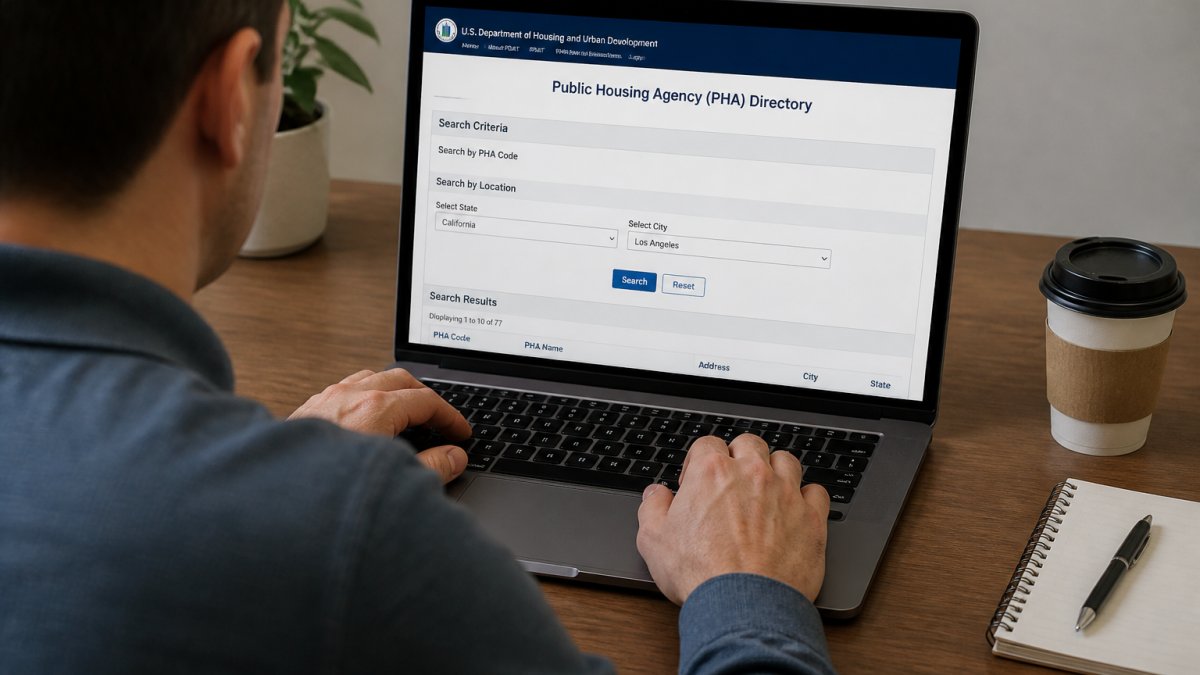
Visit HUD.gov and use the Public Housing Agencies directory to search by state, city, or county. Enter your target location (where you plan to live) to find the administering agency.
If unsure which jurisdiction covers your desired neighborhood, search by street address or zip code on county websites.
Understanding Jurisdictional Boundaries
Apply to the PHA serving your target neighborhood, not your current address. If you live in one county but want to move to another, apply to the PHA in the county where you're seeking housing.
In metropolitan areas with multiple PHAs, call the agency you identify to confirm they serve your specific address or neighborhood.
Checking Waiting List Status Before Applying
Contact your PHA to confirm they are currently accepting applications, as many close their waiting lists when demand exceeds capacity.
Ask whether the waiting list is open, when it will reopen if closed, whether they accept applications year-round, and whether they use a lottery or first-come, first-served system.
Applying Across Multiple Jurisdictions
You may apply to multiple PHAs simultaneously to reduce waiting time. Each application is independent.
Keep records of which agencies you've applied to, your reference numbers, and submission dates to prevent duplicates and track status.
Getting Help Finding Your Agency
If you need help locating your PHA, contact HUD's Office of Public Housing at 202-708-0950 or reach out to local nonprofits that assist with housing applications.
Step 4: Submit Your Housing Choice Voucher Application
Follow your local agency's specific instructions to reduce delays and rejection risk.
If your agency offers an online portal, create an account and fill out the form there. Upload documents as PDF files or images.
If in-person submission is required, bring original documents or certified copies and ask whether you can complete the form on-site or must return it later.
Be thorough and accurate. Double-check spelling, especially your name and Social Security number. List all household members.
Keep a copy of your completed application and submission receipt. Ask the agency for an estimated timeline for hearing back about your status.
Step 5: Monitor Your Section 8 Waiting List Status
After submission, you enter the waiting list. Monitor your status to stay informed and plan your housing search.
Most agencies let you check your status online or by phone using your reference number or confirmation code.
Waiting list timelines vary significantly by location, from months to years. Understand typical timelines for your area to set realistic expectations.
Contact your agency periodically to confirm they have your correct contact information. If you move, notify them immediately.
Some agencies conduct periodic verification while you're on the waiting list. Respond promptly to requests for updated income, household composition, or residency information.
Step 6: Complete Verification and Selection
When your name reaches the top of the waiting list, the agency begins verification to confirm all information is accurate and current.
The Verification Appointment
The agency will schedule a verification appointment. Bring original documents proving income, residency, identity, and household composition.
A housing specialist will review your documents and ask about your employment, income, household changes, current living situation, assets, and immigration status.
The agency may conduct background checks and verify employment. This typically takes two to four weeks.
Selection and the Selection Letter
If you pass verification, you'll receive an official selection letter. Read it carefully and note all deadlines.
Miss any deadline and you may lose your voucher. Mark all dates on your calendar immediately.
The Mandatory Briefing Session
You must attend a mandatory briefing session (typically 2-3 hours) covering how the program works, your rights and responsibilities, how to search for eligible properties, rent calculation, inspections, and program rules.
Bring identification and requested documents. Confirm whether the briefing is in-person or virtual when you receive your selection letter.
Understanding Your Voucher Amount and Rent Calculation
Your voucher specifies the maximum the agency will pay toward rent.
Your voucher amount is based on your agency's local payment standard, which varies by bedroom count and location.
The Housing Search Period
After your briefing, you have 60-120 days to find and secure a rental property.
Not all landlords accept vouchers. Be prepared to explain how the program protects them (guaranteed rent payment) and what the inspection involves.
The Housing Inspection
The landlord must correct deficiencies before the inspection passes. Minor issues may be corrected within a timeframe; major issues may result in rejection.
If the unit passes, the agency issues the HAP contract and you can move in. If it fails, you must find another property.
If Your Search Period Expires
If you don't find housing within your search deadline, your voucher may be terminated.
Step 7: Receive Your Voucher and Begin Your Housing Search
Once you're approved and receive your voucher, you can begin searching for rental housing. Your voucher represents a commitment from the government to help pay your rent.
The voucher specifies your monthly housing assistance amount based on your family size and local rental market conditions. You're responsible for paying the difference between your voucher amount and the actual rent. This tenant portion is typically 30 percent of your household income.
You have a limited time to find housing, usually 60 to 120 days depending on your local agency. During this period, you can search for any rental property that meets program standards. The landlord must agree to accept Section 8 vouchers.
Contact landlords and tell them you have a Housing Choice Voucher. Some landlords welcome voucher holders because the government guarantees a portion of the rent. Others may be less familiar with the program. Be prepared to explain how it works.
Once you find a suitable property, the housing agency inspects it to ensure it meets program standards. The inspection covers structural integrity, utilities, safety features, and sanitation. If the unit passes, you can sign the lease and move in.
Common Application Mistakes and How to Avoid Them
Avoid these common mistakes that delay applications or result in rejection.
Incomplete applications are the most common problem. Read the entire application before starting, check every box, and write "N/A" for questions that don't apply.
Inaccurate information causes delays. Double-check spelling, Social Security numbers, and addresses. Contact the agency if unsure rather than guessing.
Always list every household member. Omitting family members is fraud and can result in denial and legal consequences.
Missing deadlines causes rejection or placement at the end of waiting lists. Send applications well before deadlines to account for delivery time.
Not responding to agency requests is another common error. If your agency asks for additional documents or information, respond within the specified timeframe. Ignoring requests results in application rejection.
Misunderstanding local agency procedures causes confusion. Some agencies accept walk-in applications while others require appointments. Some have online portals while others only accept paper applications. Contact your specific agency to learn their exact process rather than assuming.
Navigating the Section 8 application process is complex, but breaking it into clear steps makes it manageable. At ezanser.com, we understand how confusing government housing programs can be. Our step-by-step checklists transform official HUD information into plain language you can actually follow. Get started with ezanser.com and access the clarity you need to secure your housing assistance.
Frequently Asked Questions
What are the basic Section 8 eligibility requirements?
To qualify for Section 8 housing, your household income must fall below the limits set by your local public housing agency, which vary by family size and location. You must be a U.S. citizen or eligible immigrant, have a valid Social Security number, and pass background checks for criminal history and rental history. Eligibility also depends on household composition and any existing rental assistance you receive. Contact your local PHA to confirm the exact income thresholds and requirements for your area.
What documents do I need to apply for a Housing Choice Voucher?
You'll need proof of income (recent pay stubs, tax returns, or benefit statements), identification, Social Security cards for all household members, proof of citizenship or eligible immigration status, and bank statements showing current assets. Bring proof of residence, rental history references, and any documentation of household composition changes. Your local housing agency may request additional documents like proof of disability or child support payments. Prepare copies of everything and bring originals for verification.
How long does it typically take to get approved for Section 8?
Timeline varies significantly by location. Many housing agencies have waiting lists that can take months to years before your name is called. Once selected, the application review process typically takes 30-60 days. After approval, you receive your voucher and have a set period (usually 60-90 days) to find a qualifying rental property. Total time from application to moving into your Section 8-assisted home can range from several months to multiple years depending on your local agency's waitlist length.
Can I apply for Section 8 in multiple areas?
Yes, you can apply to multiple public housing agencies in different jurisdictions. Each agency maintains its own separate waiting list and application process. However, once you're selected and receive a voucher from one agency, you must use it within that agency's jurisdiction unless you request a transfer later. Apply to agencies in areas where you want to live, but understand that accepting a voucher from one agency typically ends your eligibility with others.